A $3000 Far North Queensland Hospital Foundation research grant awarded in 2014 has helped unlock more than $8 million in national research funding, supporting work that is transforming how dementia is understood, assessed and managed in Aboriginal and Torres Strait Islander communities.
The grant was awarded to Cairns neuropsychologist Professor Sarah Russell, providing her first Foundation research funding and supporting early work with James Cook University’s Healthy Ageing Research Team (HART).
More than a decade later, that initial investment has helped drive the development of culturally appropriate assessment tools, a framework for healthy ageing in the Torres Strait, innovative models of care for people with mild cognitive impairment, and internationally recognised research addressing Australia’s leading cause of death.
Professor Russell said the Foundation’s early support was instrumental.
“That first grant really started the ball rolling,” Prof Russell said.
“It allowed us to test ideas, build trust with communities and demonstrate that this work mattered. That was what ultimately enabled us to secure much larger national grants.”
One of the team’s most significant findings has been that dementia occurs at around three times the rate in Aboriginal and Torres Strait Islander populations compared with non-Indigenous Australians, with some people diagnosed as young as 45.
The research has linked this increased risk to a range of overlapping factors, including chronic disease in midlife and the social determinants of health associated with the ongoing impacts of colonisation.
However, Prof Russell said it was equally important to recognise the cultural determinants that support healthy ageing.
“Connection to Country, home island, family and community all play a vital role in wellbeing and healthy ageing,” she said.
“We can draw on these strengths when developing programs and resources for Aboriginal and Torres Strait Islander communities. If we want to diagnose dementia earlier and more accurately, we have to understand people’s lives, culture and language.”
To support earlier diagnosis, the team including Associate Professor Rachel Quigley, has developed culturally appropriate screening and assessment tools that use yarning-style conversations rather than traditional Western testing methods. These tools can be used by local Indigenous Health Workers across the region.
HART also undertakes geriatric outreach visits to the Torres Strait within their Queensland Health roles, up to four times a year, ensuring research findings are translated directly into clinical practice. The team works closely with primary health care providers, training Indigenous Health Workers and supporting GPs to recognise the early signs of cognitive impairment and undertake culturally safe assessments.
Since receiving that first Foundation grant, HART has secured more than $8 million in competitive research funding, including:
* $525,000 for the first dementia prevalence study and longitudinal follow-up in the Torres Strait
* $1.1 million to develop a Healthy Ageing Framework
* $1.5 million to reduce dementia risk through Aboriginal Community Controlled Health Organisations
* $630,000 to improve the detection of cognitive impairment and dementia in partnership with Aboriginal Community Controlled Health Services
* $500,000 to develop a social and emotional wellbeing tool for the Torres Strait
* $450,000 to strengthen chronic disease programs
* $1 million to develop a memory program for people with mild cognitive impairment in the Torres Strait.
The team’s work has attracted international attention, with researchers presenting at conferences overseas, collaborating with experts around the world, contributing to Australian Association of Gerontology forums and publishing extensively in peer-reviewed journals.
“We often describe ourselves as accidental researchers,” Prof Russell said.
“We started as clinicians responding to what we were seeing in community, and the research followed from there.”
Today, Prof Russell and the team are working alongside PhD student and Aboriginal geriatrician Dr Rhiann Sue See to pilot a model of care for people with mild cognitive impairment, which is often a precursor for dementia.
“This work will never really be finished,” Prof Russell said. “We’re always identifying gaps and trying to understand them well enough to do something meaningful in response.”
Foundation CEO Gina Hogan said the story demonstrated the long-term impact of investing in early-stage research.
“This is exactly why the Foundation invests in research,” Mrs Hogan said. “A relatively small grant, at the right moment, can ultimately change practice, influence policy and improve outcomes for individuals, families and entire communities.”
To find out how to get involved in supporting the Foundation’s research grants, visit www.fnqhf.org.au/donate
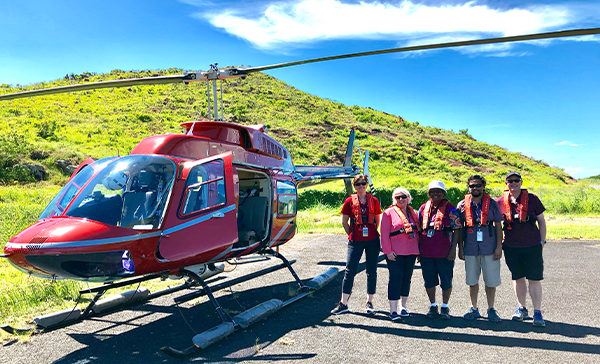
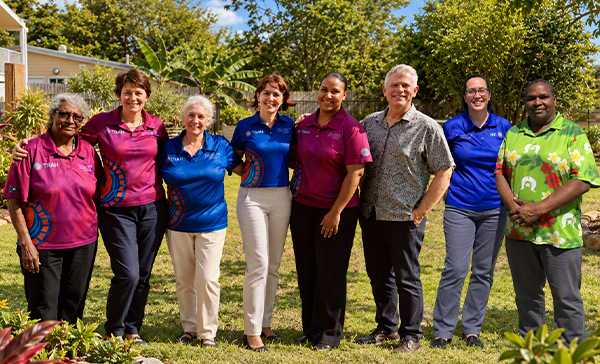
Photo: Betty Sagigi, Prof Sarah Russell, Dr Rachel Quigley, Melissa Kilburn, Chenoa Wapau, Prof Eddy Strivens, Dr Sue See and Moira Mau.
Prof Sarah Russell, Dr Rachel Quigley, Betty Sagigi, Dr Gavin Miller, Prof Eddy Strivens.