A small investment by the Far North Queensland Hospital Foundation has delivered an extraordinary return – helping to unlock millions of dollars in national and international research funding and positioning a locally led tuberculosis (TB) research project on the global stage.
The research, led by Professor Andreas Kupz at the Australian Institute of Tropical Health and Medicine at James Cook University, is tackling one of the most critical questions in infectious disease research: why the century‑old Bacille Calmette–Guérin (BCG) vaccine protects young children but fails to provide lasting immunity into adulthood.
Answering that question could unlock the development of a far more effective TB vaccine, with the potential to save lives both in Australia and around the world.
TB remains one of the deadliest infectious diseases globally, claiming around 1.5 million lives each year. While Australia has a relatively low incidence overall, the burden is disproportionately high among Aboriginal and Torres Strait Islander communities. At the same time, neighbouring Papua New Guinea continues to experience one of the world’s most severe TB epidemics, creating an ongoing risk of drug‑resistant TB entering northern Australia.
In 2018 and 2019, the Far North Queensland Hospital Foundation awarded two rounds of seed funding – a $5000 grant followed by a $50,000 grant – to support the early stages of the research. That funding enabled critical groundwork, including ethical, regulatory and site approvals across Cairns, Thursday Island and Bamaga, as well as extensive community engagement to build participation and trust.
Professor Kupz said the Foundation’s support was pivotal in getting the project started.
“These early steps are often the hardest to fund, but they are absolutely essential,” Prof Kupz said.
“Without that initial support from the Foundation, none of what followed would have been possible.”
The strong base established through the Foundation‑backed seed funding helped the team secure two highly competitive grants from the National Health and Medical Research Council, collectively worth more than $2.5 million, in 2020 and 2021. The project also has attracted more than US$4.7 million in additional funding from the United States National Institutes of Health and the Gates Foundation for related TB vaccine research.
Over three years, the research team collected blood and nasal swab samples from 63 participants across Far North Queensland, from Cairns to communities in the Torres Strait. Recruitment was delayed by COVID‑19 travel restrictions and the challenges of working across remote regions, particularly because many participants were children, with sample collection completed in 2024.
Researchers are now working with a range of specialist collaborators, including bioinformaticians, to analyse the complex datasets. These analyses are exploring how pre‑existing immunity and the nasal microbiome – the community of bacteria in the upper respiratory tract – may influence susceptibility to TB and long‑term vaccine protection.
If all goes to plan, final analyses will be completed by the end of 2026. The findings are expected to inform improvements to the existing BCG vaccine and guide the design of next‑generation TB vaccines, particularly for populations at highest risk.
“These early‑stage grants are often small in dollar terms, but they can make an enormous difference,” Foundation CEO Gina Hogan said.
“This project shows exactly why local research matters,” Mrs Hogan said.
“By investing in research that responds to the unique health challenges of Far North Queensland, we’re helping to improve outcomes for our communities while also contributing to global solutions for one of the world’s most serious infectious diseases.”
What began as a locally supported initiative in Far North Queensland has grown into an internationally backed research effort – a powerful example of how targeted regional investment can deliver global impact.
To find out how to get involved in supporting the Foundation’s research grants, visit www.fnqhf.org.au/donate
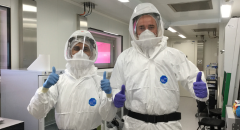
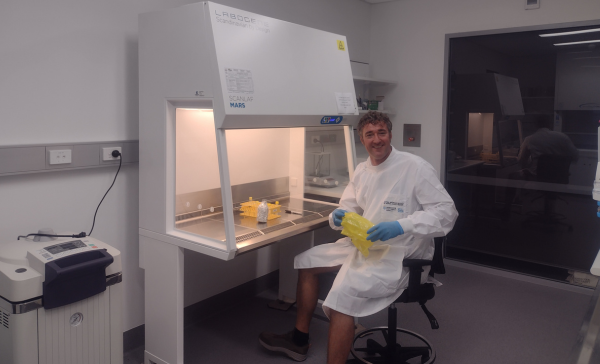
Photo: Tuberculosis researcher Professor Andreas Kupz and (below) with postdoctoral research fellow Dr Harindra Sathkumara.